
The Republican nominee will have 90 minutes to save his presidential campaign after videos of his passing obscene remarks about women surfaced.

Nothing, according to Deepak Lal. He argues that the contemporary attempts to control immigration in the US and UK are not nativist.

US President Barack Obama's administration has faced extensive criticism for its failure to prosecute bankers criminally for behavior that led to the financial crisis.

US President Barack Obama's plan to shield up to 4.7 million undocumented immigrants from deportation may be immensely significant, but only a comprehensive legislation from the Congress with a larger goal could do justice to immigrant expectations.

What's worse than watching someone take a million selfies?
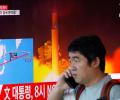
North Korea warns the US that it will soon 'suffer the greatest pain it ever experienced in its history'. Rajaram Panda looks at the latest twist in the North Korean crisis.

Russia and the US began second round of negotiations on securing Syria's chemical arsenal, hoping the high-stakes talks would lead to broader peace efforts, even as Damascus submitted application to UN for joining the chemical weapons convention.

Here's the full text of Prime Minister Narendra Modi's address to the United States Congress.

The Indian duo of Anirban Lahiri and Shiv Kapur made an early exit after missing the halfway cut at the US Open at Chambers Bay in University Place, Washington.

They gave voices to sexual assault & harassment survivors across the world.

North Korea is unlikely to strike first, but its response in retaliation, if attacked, could be massive even at the expense of its own destruction, says Rajaram Panda.

North Korean pair given warm welcome on Pyeongchang debut

Tamil Nadu has the most efficient and effective cadaver transplant programme in India.

'We are encouraged by what the prime minister said recently on these issues... We will keep a close eye on these issues. They are very important and as are other elements of our human rights and religious freedom.' 'So, absolutely, we'll keep a focus on them.'

Protestors outside the Indian Consulate in San Francisco, California, tell Rediff.com's Ritu Jha that they are outraged because nobody is speaking for the rights of Sangeeta Richard, the former domestic help of Indian diplomat Devyani Khobragade

'They don't always agree with our governments, their teachers or their parents, but it is the conviction of their ideas, and their determination to share them with the world that, I believe, is one of the greatest sources of hope for our planet.' 'The colonisation of space, understanding the very building blocks of matter and the universe, utilising our understanding of the human genome to conquer disease -- these are the tasks waiting for a fellowship of minds to realise new triumphs in our collective destiny.'

The expulsion is likely to cloud India-China ties as Narendra Modi visits China for the G-20 Leaders Summit on September 4-5 and Xi Jinping is scheduled to be in Goa for the BRICS meeting on October 15-16.

'In the end, investing is about people.' 'If you get the right people, they make things happen,' Mengistu Alemayehu tells Shyamal Majumdar.
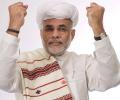
Two former senior United States diplomats, with more than 60 years experience in South Asia between them, have exhorted Washington to establish communication with Bharatiya Janata Party's prime ministerial candidate Narendra Modi sooner than later.

Leading think tank discusses a likely Narendra Modi government and America's engagement with the man US once scorned. Aziz Haniffa reports
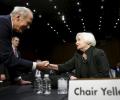
Janet Yellen is guiding the Federal Reserve towards its first rate rise in a decade armed with traditional economic models that some economists worry could fail her in a world of massive money printing and near zero rates.

Prime Minister Narendra Modi delivered an impassioned speech to the United States Congress.

'The world may be desirous of peace, but not Kim Jong-un.' 'Should we then accept the old adage that to maintain peace, we should be prepared for war?' asks Rajaram Panda.

Diplomats agree that amid stormy relations with China and Pakistan, Modi has posted impressive foreign policy successes, notes Aditi Phadnis.

Here's your weekly digest of the craziest stories from around the world.
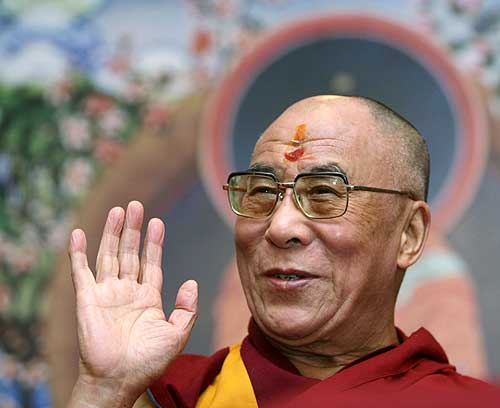
'The first time that China alleged the Dalai Lama was 'anti-national' and 'unpatriotic' was after he affirmed that Arunachal Pradesh and Tawang are part of India,' points out former RA&W official Jayadeva Ranade.

'Just how strong were the ties between the world's largest and oldest democracies that an incident involving a diplomat and a maid led to anger threatening the relationship itself? Or had the relationship been weakening in the past few years, masked by the empty symbolism of State dinners, asks Devesh Kapur.

Donald Trump, Hardik Patel, Kangana Ranuat... The year 2017 wouldn't have been the same if it weren't for these personalities and many more. As we herald in 2018, here's a look at the faces and stories which left an indelible mark on us.
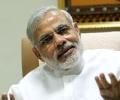
Wisner said during a discussion organised by Asia Society here yesterday on the Indian elections.
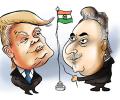
Could Ambassador B S Prakash's nightmare turn real?
Is North Korea really dismantling its nuclear programme? Rajaram Panda explains the many challenges to denuclearise the Korean Peninsula.

'Demonetisation, is in principal, a mistake, because it involves a theft -- a taking of private property by the State.' 'It is one of those bad Indian ideas that has been tried twice in the past, with two failures for the record books.' 'This cloud over the economy will probably remain as long as Modi is in power.'

'I think investors see a lot of positives happening in India now.'

'... A youth movement which could really transform our politics in a way that the existing elites don't understand.' 'The more you suppress free expression, the more people will value it.' 'The State can't suppress a young society like India where there are so many interesting new ideas emerging,' says Sunil Khilnani, whose latest book Incarnations looks at Indian history through 50 lives.

Anup Patel tells Chaya Babu that he is bound by a sense of duty to help the country of his birth fight the menace of human trafficking

'If the RSS should be saluted for choosing such a scholarly statesman to address its highly trained cadre, one must also praise Pranab Da's sagacity for having gracefully accepting the invitation, thus disapproving any ideological apartheid,' says former BJP MP Tarun Vijay.

'If you look at the relationship with Pakistan, or the relationship with China, both are today, more uncertain than they were when this government came into power.'

The prime minister and president stated their intention to expand defence co-operation to bolster national, regional and global security.

'Pyongyang's strategy seems to be a cry to be treated as equal with the US and Beijing and this aspiration is premised on equipping itself with weapons as devastating as theirs,' says Rajaram Panda.

'No matter how severe sanctions the UN security council imposes on North Korea, the impact of the sanctions would depend on how faithfully they are enforced by China,' says Dr Rajaram Panda.
